Key Takeaways
- Direct mail packages deliver higher response rates than digital channels, with studies showing 5–9% response rates for nonprofit mail versus roughly 0.1% for email.
- MailerBot can automate printing and sending of postcards, donation receipts, and thank-you letters via its dashboard, API, and Zapier integrations.
- Leveraging USPS nonprofit postage rates with a valid nonprofit indicia can help nonprofits save up to 70% on postage compared to regular postage at retail first class rates.
- Combining nonprofit Marketing Mail for bulk campaigns and first class mail for time-sensitive pieces is usually the most cost-efficient strategy.
- Starting with one or two core automations-like thank-you letters or monthly postcards-lets organizations test results before scaling.
Why Physical Mail Still Matters for Nonprofits in 2026
Even in 2026, direct mail remains one of the highest-ROI channels for individual donations. According to the Alliance of Nonprofit Mailers' report on Giving USA 2026, 82% of donors say they respond to direct mail appeals. Gen Z showed the highest responsiveness at 93%, challenging the assumption that younger generations only engage digitally. Meanwhile, nonprofit mail response rates sit at 5–9% compared to roughly 0.1% for email fundraising.
A tangible mail piece-a letter or postcard-is harder to ignore than an email buried in a crowded inbox. Tangible mailers can serve as ongoing reminders of an organization's cause, often sitting on a kitchen counter or desk for days. Printed letters feel more thoughtful than digital communications, and for many core donors aged 55 and over, physical mail is still the go to choice. Mail also connects with elderly or rural supporters lacking internet access, making it essential for broad reach. Tangible experiences from physical mail build trust with donors, which is critical for organizations handling donations for critical missions like food banks, shelters, and medical research.
Common nonprofit mailers include:
- Appeal letters (2–6 pages with a compelling story and clear ask)
- Reply cards and return envelopes (making it easy to give)
- Postcards (for invitations, reminders, or light-touch impact messages)
- Pledge cards (for memberships or recurring giving programs)
- Stewardship reports (showing donors how gifts were used)
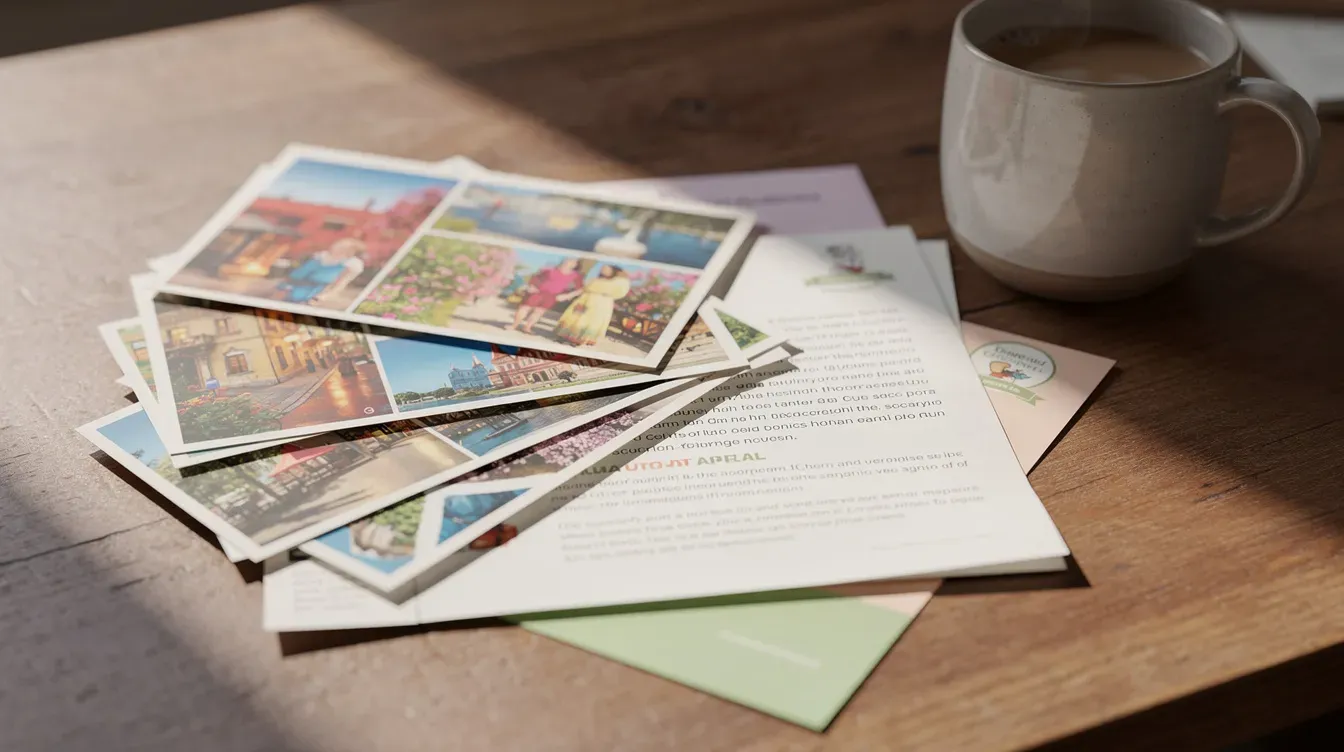
a 10,000-piece nonprofit letter campaign at nonprofit rates might cost roughly $1,800 in postage versus approximately $7,300 at retail first class rates.
Overview of USPS Options: First-Class vs Nonprofit Marketing Mail
Most nonprofit organizations combine two united states postal service options to balance speed and cost: first class mail and USPS Nonprofit Marketing Mail.
First-Class Mail delivers in 1–5 business days and is prioritized over nonprofit mail by the postal service. It is required for certain content like invoices and statements. The current retail rate sits at $0.73 for a 1 oz letter. This class mail is your best option for time-sensitive or compliance-related pieces.
USPS Nonprofit Marketing Mail is slower-nonprofit mail can take 3–10 days to arrive-but the postage rates are dramatically lower. This mail class is used for fundraising appeals, newsletters, and general donor communications. USPS Marketing Mail offers discounts for nonprofit organizations, with presorted nonprofit letters starting around $0.18 per piece.
Here is a concrete comparison: a 10,000-piece nonprofit letter campaign at nonprofit rates might cost roughly $1,800 in postage versus approximately $7,300 at retail first class rates. That is over $5,000 in savings on a single campaign-money that can go directly toward the organization's mission.
MailerBot can route campaigns to the right mail class and leverage reasonable nonprofit postage rates when the organization provides a valid nonprofit indicia. This flexibility lets nonprofits save money on bulk mailings while still using first class for urgent pieces.
Top 6 Ways Nonprofits Can Leverage Mailers (Letters & Postcards)
Here is the core of this guide: a numbered rundown of the six most impactful strategies for using nonprofit mailers in 2024–2026. Each method is explored in detail below, with examples and how MailerBot supports automation, printing, and postage handling.
- Fundraising appeals with reply mechanisms
- Automated thank-you letters
- Donation receipts and year-end tax letters
- Event invitations, save-the-dates, and RSVP postcards
- Impact reports, newsletters, and stewardship mailers
- Geographic outreach and acquisition using postcards and EDDM
1. Fundraising Appeals: High-Response Letters with Reply Mechanisms
Classic direct mail fundraising appeals remain a top revenue source for many non profits. A well-crafted letter with a reply device can generate response rates that email simply cannot match.
Consider a year-end appeal mailed in November using nonprofit Marketing Mail: a personalized letter telling one beneficiary's story, a reply device pre-filled with the donor's name and suggested amounts, and a business reply envelope. Direct mail offers specific ask amounts to visualize impact for donors-for example, "$50 provides 200 meals" is far more motivating than a generic request.
Best practices for appeals:
- Compelling storytelling in direct mail enhances emotional connections-lead with one person's story, not statistics
- Include a single strong call to action in mailers to avoid donor confusion
- Add QR codes or short URLs for online giving (up to 50% of donors who respond to mail now give online)
- Direct mail works best as part of a multichannel campaign that includes digital outreach-pair your mailing with email and social reminders
MailerBot can print personalized letters, addresses, and reply information, then mail at non profit rates when the nonprofit's indicia is used. The organization never has to handle physical printing or stuffing. Appeals for critical missions like disaster relief may justify using first class for faster delivery during urgent windows.
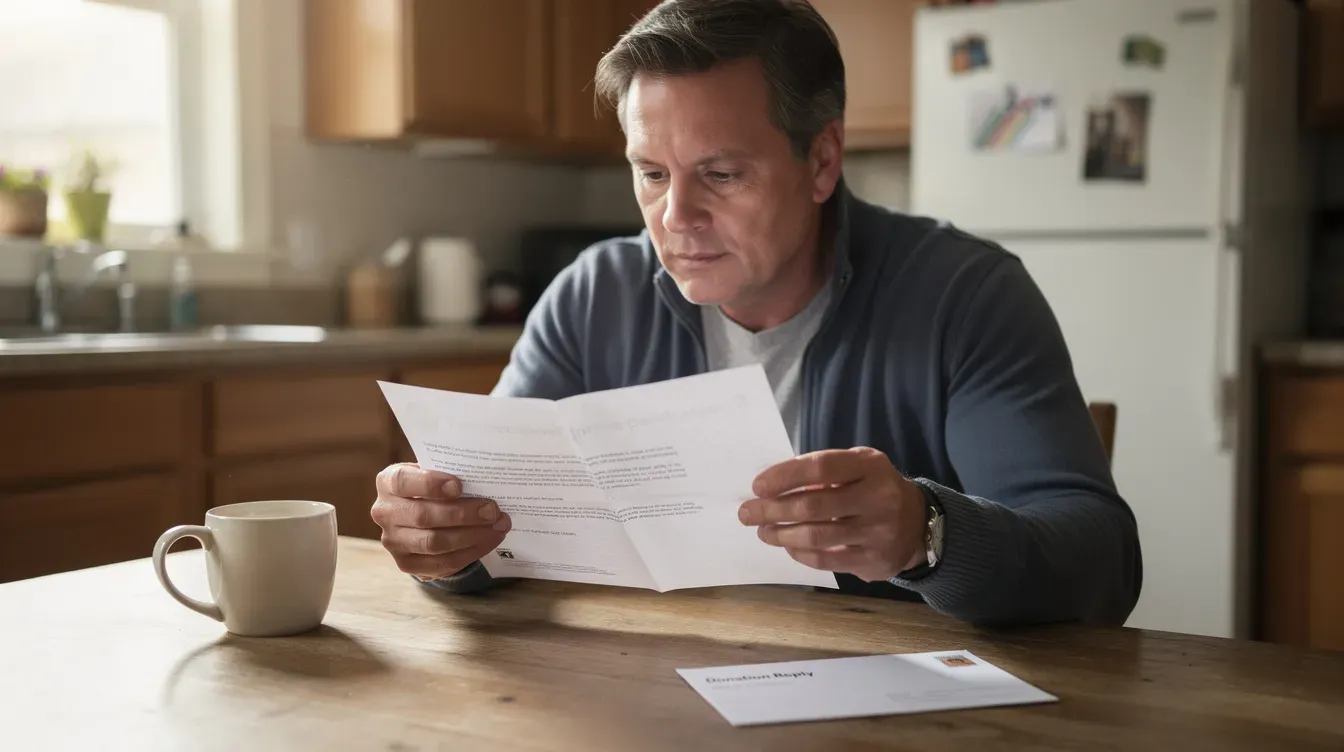
Imagine a workflow where every gift automatically triggers a printed thank-you letter mailed within 24–48 hours.
2. Automated Thank-You Letters That Deepen Donor Relationships
Thank you letters and impact reports strengthen donor relationships, but timing matters. A case study from CDS Global showed that centralizing acknowledgment mailings to arrive within 48 hours of a donation led to a 3.5% increase in second-time gifts.
Instead of batch-processing thank-you letters once per month, imagine a workflow where every gift automatically triggers a printed thank-you letter mailed within 24–48 hours. MailerBot can integrate with most donor CRMs and fundraising platforms via Zapier to trigger thank-you letters automatically whenever a "new donation" event occurs. This automated mailing can streamline donor communications and fundraising appeals without adding staff workload.
Options for tiered acknowledgment:
- Major donors: A personalized first class letter referencing the specific gift amount and program supported
- Recurring donors: A nonprofit Marketing Mail postcard with a warm message and impact snapshot
- First-time donors: A welcome letter with the organization's story and next steps
Personalizing communication through past gifts increases donor engagement. MailerBot handles variable data-donor name, last gift amount, local program-so each letter feels individually crafted. Automated services enable personalized mailings without external design resources, and the nonprofit never has to manually edit each file.
3. Donation Receipts and Year-End Tax Letters
Physical mail is essential for sending tax receipts and compliance documents. Donors expect prompt, accurate receipts for their records, and failure to deliver impacts trust and future giving.
Typical timing involves sending an immediate receipt after each gift plus a consolidated annual tax letter in January summarizing all donations for the prior year. Compliance with regulations adds complexity to mailings, making accuracy and speed paramount.
MailerBot can generate and mail individual receipts or batch year-end letters either directly from the MailerBot dashboard or automatically via API calls from the nonprofit's CRM or accounting system. This reduces production time and eliminates hours spent on printing, inserting, and addressing. Automated mailing services reduce administrative overhead for nonprofits, freeing staff to focus on mission-critical work.
These pieces typically travel via first class mail since they are time-sensitive. While postage costs are higher per piece, organizations can still reduce overall cost through automation and centralized production rather than manual processing at the post office.
4. Event Invitations, Save-the-Dates, and RSVP Postcards
Physical event invitations drive higher attendance for galas, walks, auctions, and community events-especially when paired with email and social media follow-up.
Common formats include a 5x7 flat card invitation, folded cards, and RSVP postcards that can travel at nonprofit postage rates for broad outreach. A strong approach: send a save-the-date postcard 10–12 weeks before a spring 2026 fundraising gala via nonprofit Marketing Mail, followed by a formal letter invitation 4–6 weeks prior using first class for priority delivery to major donors.
MailerBot can print high-quality color postcards and letters, manage addressing, and mail to segmented lists-major donors, lapsed donors, corporate sponsors-with different designs for each segment. Using high-quality images connects past contributions to outcomes and makes the invitation feel worth keeping.
Include QR codes or personalized URLs on invitations so recipients can register online while the physical mailer serves as the visual reminder on their fridge or bulletin board.
5. Impact Reports, Newsletters, and Stewardship Mailers
Stewardship mail-non-ask communications like quarterly newsletters and annual impact reports-helps donors see the results of their gifts. Donors who regularly receive impact mailers are more likely to respond to the next appeal. This is an investment, not an expense.
Examples include a 12-page annual impact booklet mailed each March or a 4-page newsletter mailed quarterly. These mailers rarely require first class delivery speed, making nonprofit mail the better fit to keep costs low, especially for large national lists. Nonprofits can deliver publications and diverse content at a fraction of the retail rate.
Segmenting donor lists improves the relevance of messaging. MailerBot's print-and-mail workflows handle variable data so each donor receives a version tailored to their interests or geography-a supporter in Texas sees stories from the Texas chapter, while a donor in Ohio sees local impact.
6. Geographic Outreach and Acquisition Using Postcards & EDDM
Nonprofits can reach entire neighborhoods or zip codes beyond their current donor list using postcards and USPS Every Door Direct Mail (EDDM). A community health clinic in Phoenix, for example, could target every household in selected carrier routes with a 6x9 postcard promoting free screening events, mailed at nonprofit rates when eligible.
MailerBot can print and mail postcards either to a specific donor list or to entire EDDM areas, reducing the complexity of targeting carrier routes and preparing EDDM paperwork. Audience segmentation by giving history leads to tailored messaging for known supporters, while EDDM covers the broader audience.
When to choose EDDM vs list-based mail:
- EDDM: Broad local outreach, volunteer drives, community events, awareness campaigns
- List-based: Targeted appeals to past donors, high-value prospects, lapsed supporters

Using MailerBot to Automate Nonprofit Mailers
MailerBot is a print-and-mail automation platform designed to handle everything from single donor letters to large nonprofit campaigns. Nonprofits can upload designs, connect their donor or membership system, and let MailerBot handle printing, addressing, and entry into the USPS mail stream.
Key capabilities:
- Zapier triggers: Connect Salesforce, HubSpot, Airtable, or event platforms to automatically send postcards or letters based on donor actions
- API integration: Development teams can use the MailerBot API for server-to-server integration to generate daily tax letters, monthly pledge reminders, or lapsed-donor reactivation campaigns
- Nonprofit postage: When a nonprofit provides its USPS nonprofit indicia, MailerBot applies nonprofit rates so campaigns qualify for lower USPS Marketing Mail pricing rather than standard class mail
- Tracking: Automated mailing tools allow nonprofits to track delivery and response rates across campaigns
Automated mailing services reduce administrative overhead for nonprofits, and organizations can save up to 60% on postage with automated services that optimize mail class and preparation.
Data quality is equally important. Nonprofits must ensure accurate mailing lists for efficiency.
Design and Data Best Practices for High-Performing Nonprofit Mailers
Strong design drives response. Nonprofit letter mailers should prioritize readability: 11 or 12 pt fonts, generous margins, and simple layouts. A single strong call to action per mailer-donate, register, volunteer-avoids donor confusion. Using high-quality images connects past contributions to outcomes and creates emotional resonance.
Data quality is equally important. Nonprofits must ensure accurate mailing lists for efficiency. Correct addresses, deduplication, and personalization fields (first name, last gift amount, local chapter) prevent waste and improve response rates. MailerBot can ingest address lists, help standardize them to usps size and format requirements, and apply variable data printing for names, segments, and custom message variations without requiring the nonprofit to manually merge documents.
Designs must also comply with USPS address and indicia placement requirements-your permit number and indicia need proper positioning, and mail pieces must meet specific requirements for dimensions and weight.
Budgeting, Postage Rates, and Choosing the Right Mail Class
High postage costs strain nonprofit budgets, and postage increases continue to add pressure. As of July 2026, USPS implemented an average 4.8% increase across rate classes, though the postal regulatory commission kept nonprofit rate increases softer. The consumer price index and density additional rate authority both influence how these rates are set, and policy makers continue to weigh the public policy rationale for maintaining affordable non profit rates that help nonprofit postal rate payers and commercial mailers alike.
A simple example budget for a 5,000-piece postcard campaign:
Mail Class | Est. Per-Piece Postage | Total Postage |
|---|---|---|
Nonprofit Marketing Mail | ~$0.19 | ~$950 |
Standard Marketing Mail | ~$0.45 | ~$2,250 |
First-Class Mail | ~$0.73 | ~$3,650 |
Nonprofits can save up to 70% on postage with USPS Marketing Mail versus first class. Decision guidance: use nonprofit Marketing Mail for large, non-urgent campaigns; choose first class for receipts, urgent notices, and small high-value segments. Delivery delays can disrupt fundraising schedules, so plan accordingly. Nonprofits face time-consuming mailing processes when handled manually-MailerBot can help estimate total print-and-postage costs before a campaign launches so organizations can secure board or leadership approval based on real numbers.
Getting Started: Steps to Launch Your First MailerBot Campaign
Here is a practical checklist a development director can follow to get a pilot campaign live:
- Confirm USPS nonprofit authorization and indicia - organizations must apply for a non-profit authorization number from USPS and provide proof of IRS recognition
- Define campaign goal and audience - pick one use case (e.g., thank-you letters for new donors)
- Create design and message - use MailerBot templates or upload your own; provide quality layouts with a clear call to action
- Upload or connect your list - import from your CRM, connect via Zapier, or use the API
- Select mail class and schedule - choose nonprofit Marketing Mail or first class based on urgency
- Launch and review results - track response rate, average gift size, and repeat-gift rate
Start with one or two core automations-such as thank-you letters and monthly donor welcome postcards-before building more complex triggered campaigns. A small test batch lets you validate your mailing service workflow with minimal risk and free up your team to focus on the organization's vital missions.

Ready to Automate your direct mail?
Start sending in minutes. No monthly fees, no minimums.
FAQ: Common Questions About Nonprofit Mailers
Nonprofits must obtain special approval for discounted rates by applying to USPS as a Nonprofit Marketing Mailer. You will need IRS 501(c)(3) recognition (or other qualifying status), articles of incorporation, and financial documentation. Nonprofits must have IRS recognition to qualify for USPS rates, and mailings must relate directly to the nonprofit's mission to qualify. The organization must not direct net income to private individuals to qualify. Some categories of nonprofits automatically qualify based on their IRS designation. Once approved, the nonprofit receives authorization and can use a nonprofit indicia at its approved post office. MailerBot requires this valid indicia to apply nonprofit postage pricing to eligible campaigns. The postal service depends on this documentation to verify eligibility, so keep your records current.
First class mail is best for time-sensitive or compliance-related pieces: tax receipts, pledge reminders with tight deadlines, membership cards, and legal notices. Nonprofit Marketing Mail is typically sufficient for broad fundraising appeals, newsletters, and general event invitations where a 3–10 day delivery window is acceptable. Segment by importance: small, critical segments go first class while the bulk uses nonprofit class mail. This approach helps organizations provide quality, reliable mail delivery while controlling costs. The universal mail service obligation means USPS handles both classes nationwide, but speed and priority differ. For legal or grant-related documents that require proof of delivery, consider Certified Mail as a mailing service option.
Full handwritten content usually requires manual processing, but printed "handwritten-style" fonts and signatures can be added via variable data printing to create a personal feel. Research from the American Cancer Society showed that handwritten personalization on mail pieces raised enough extra contributions to justify the higher per-piece cost. Lightweight inserts like response devices or flyers can be included in letter packages provided total weight stays within USPS letter standards. MailerBot can support multi-component packages and incorporate realistic script fonts for signatures and short notes.
MailerBot integrates via Zapier with popular tools such as Salesforce, HubSpot, Airtable, and many fundraising platforms to trigger mail based on events like a new donation, event registration, or lapsed donor flag. For organizations with technical resources, the MailerBot API allows direct integration to create, proof, and launch mail jobs programmatically-ideal for daily receipt shipping or batch request processing. For teams without technical staff, lists and designs can be uploaded manually through the MailerBot interface, with templates and clients support to simplify setup.
Within the continental U.S., USPS Nonprofit Marketing Mail usually takes about 3–10 business days, while first class mail generally arrives within 1–5 business days. Plan campaigns-especially year-end appeals and event invitations-with extra lead time when using nonprofit mail so all supporters receive pieces before key deadlines. While the postal service cannot guarantee exact delivery dates for Marketing Mail, MailerBot's production timelines are fixed and predictable through its approval and scheduling workflow, ensuring pieces enter the USPS system on schedule with laser focus on your campaign calendar. This benefit means your organization can plan with confidence even as postage increases and volume shifts continue to reshape the mailing landscape for non profits.

Print to Mail Service: How PDF-to-Mail Solutions Like MailerBot, DocuPost, and LetterStream Transform Business Mail
A print to mail service is an online mailing process where users upload documents, enter addresses, and the platform prints, inserts, and delivers physical mail via usps.
Home Services Postcards: 6 Proven Ways To Win More Local Customers
Home services postcards help local trades reach homeowners and stay booked. Here are six proven ways to generate leads, retain clients, and win more jobs.
Introducing MailerBot
MailerBot is a programmatic direct mail platform built by the team at Handwrytten, the world leader in handwritten note mailings.